






Regulatory maze: Rolling out a pan-European cloud
Ian Winham, CIO, Ricoh Europe
Cloud Computing is universally considered one of the biggest enablers of business growth in Europe today. So much so that Neelie Kroes, Vice-President of the European Commission, who is responsible for the Digital Agenda for Europe, recently said that she wanted Europe to be ‘cloud active’ rather than simply ‘cloud friendly’. Kroes then went on to describe how the EU is confident in the cloud’s ability to drive growth for Europe’s SMEs, further develop its ‘high tech’ business environment, deliver savings for governments and ultimately create a more efficient European economy.
However, there are still challenges for businesses that wish to embrace the cloud, especially those that span multiple EU countries. A number of laws exist across the member states regarding what data can be stored or shared with other areas of a business, both locally, within the national operation, as well as overseas. This means that companies often find it challenging to set up a single cloud service for all of their EU operations since many countries do not permit certain data to be housed outside national borders, Luxembourg’s financial services industry being one example. This presents significant headaches to pan-European businesses looking to use the cloud within their own operations.
However, Ricoh Europe – a specialist in business document processes – is an example of one such company which successfully navigated this regulatory maze to deploy a unified cloud environment across its European operations.
Ricoh Europe firmly believes that the cloud sits at the centre of the future workplace, with businesses becoming more mobile and flexible than ever before. Recent research by the Economist Intelligence Unit and sponsored by Ricoh shows that business leaders believe there will be a shift towards more decentralised employee decision-making, increased collaboration between business divisions and an increase in customer led innovation by 2020. As such, businesses need to manage information more effectively and efficiently; making sure it’s available to whoever needs it, when they need it, while at the same time ensuring it remains secure.
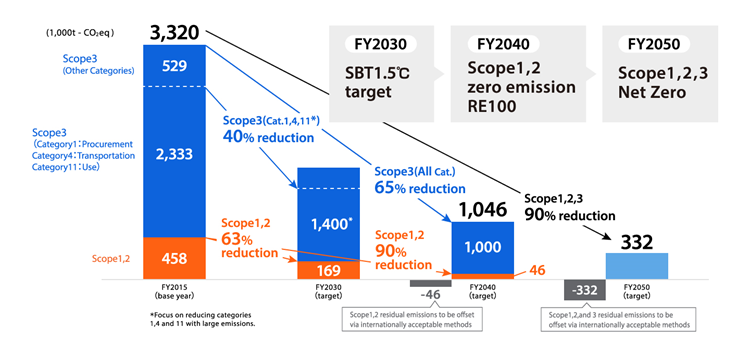
It was with this future workplace in mind that Ricoh Europe began its cloud journey in 2011. Its vision was to create a single pan-European environment to manage all its information securely, while also enabling its employees to access enterprise applications securely from anywhere across the region. Ricoh’s aim was to centralise its IT infrastructure and to reduce duplication of data through the provision of a more efficient IT and business process environment. Furthermore, at its heart was the drive to contribute towards the company’s sustainability goals of reducing its carbon emissions by 87.5 per cent by 2050 compared with 2000 levels.
In addition to the benefits, a project of this scale also brought challenges, most notably the need to navigate the different national regulations governing data security across the European Union. Ensuring compliance with each country’s laws was critical in moving the project forward.
To ensure the delivery of a secure and robust infrastructure while also overcoming the challenges posed by a lack of standardised regulation across Europe, Ricoh Europe is completely transparent about where its servers are located and where certain data is stored. Furthermore, since data privacy legislation in Germany is recognised as the most rigorous in Europe, Ricoh benchmarked its cloud standards against German legislation. By adhering to Germany’s strong emphasis on protecting the individual’s right to know what information is being collected, by whom and for what purpose, Ricoh Europe is meeting the most stringent test of data storage.
Ricoh’s operations across Europe are now integrated within the cloud with back-office systems based on standardised processes and a single sign on for users. With this infrastructure in place, Ricoh Europe is able to manage its information better, allowing employees to access it from anywhere, so they can collaborate remotely and safely, while also making informed real time decisions - benefitting customers and employees alike.
Today, Ricoh has a scalable, flexible and agile IT platform for Ricoh in Europe. It will remove more than 1000 servers across EMEA and will result in a reduction of 16.8k tonnes of CO2, the equivalent to emissions from 3350 cars. It will also support the company’s move to centralise its IT infrastructure for all its operations across Europe, with the aim of creating a more efficient IT environment for employees and clients.
At Ricoh we are fortunate in that we specialise in creating more efficient and connected business infrastructures on behalf of our customers, so we have many of the skills to manage a project of this scale. However, for other, non-specialist, businesses both large and small, the rollout of cloud across their EU operations is currently an onerous task. So if the European Commission is going to realise the opportunity that cloud presents, and its commitments in the Digital Agenda, it needs to act fast to address the regulatory environment that exists.